
How to Disrupt Competitors (Canva Case Study)
Welcome Kit Announcement
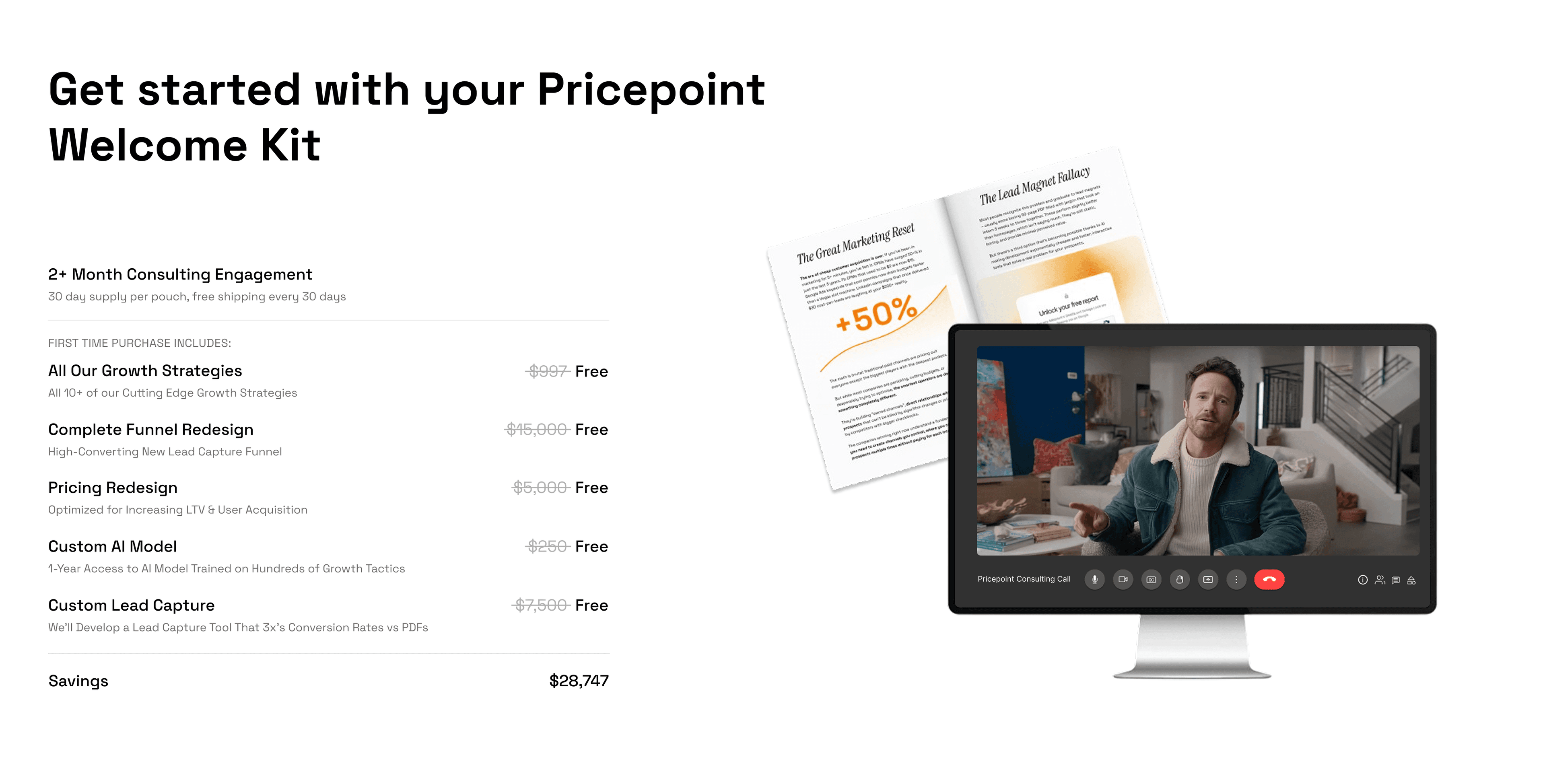
We’re super excited to announce the launch of our Welcome Kit. We’re so confident in our new strategies that any new client that is interested in working with us will get a money back guarantee and $28k+ worth of free gifts, including:
- ✅ 10+ Growth Strategies ($997 value)
- ✅ Custom AI Model Trained on 100s of Growth Tactics ($250 value)
- ✅ A Complete Funnel Redesign ($15,000 value)
- ✅ Pricing Redesign for Profitable Growth ($5,000 value)
- ✅ Custom Lead Capture Tool ($7,500 value)
This offer is launching on November 18th and will be available for 30 days.
Today we'll dive into how Canva disrupted Adobe with 3 simple changes and built a $40 billion design empire by doing the exact opposite of the incumbent. With that, let's explore:
- Adobe's onboarding
- Walking through Canva's actual user experience
- Why this strategy was uniquely suited to disrupt Adobe
Adobe's Revenue-First Approach
For decades, Adobe owned creative software through a simple but punishing model: have something to design → download Photoshop → pay $20.99/month before seeing any value → navigate impossibly complex menus → stare at a blank canvas wondering where to start.
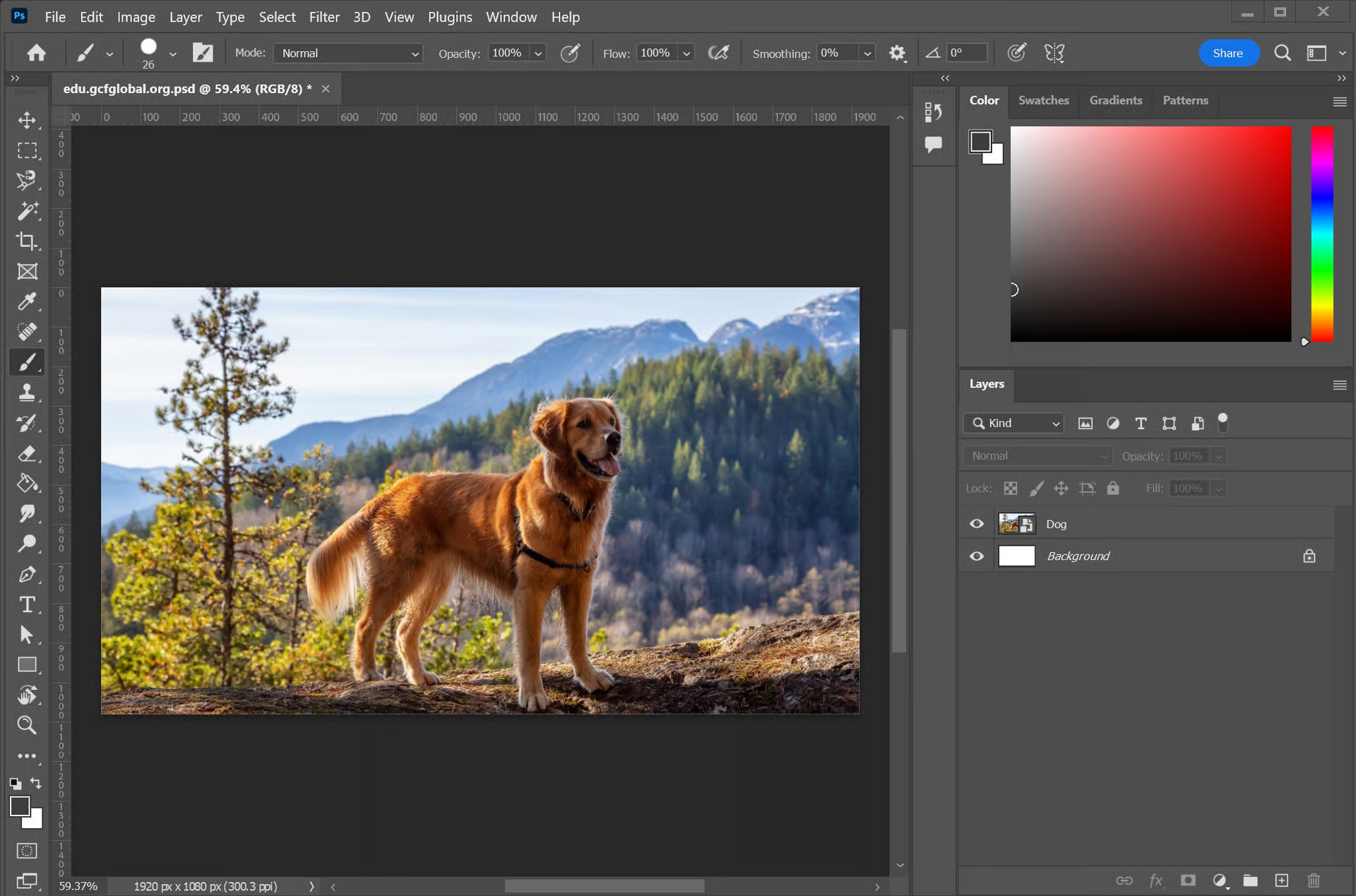
This worked brilliantly for Adobe because professional designers had no choice; they needed the advanced features and were willing to climb the learning curve. But it created a massive barrier for everyone else: students, marketers, small business owners, and parents just wanting to make a school poster.
Adobe's revenue-focused, app-first approach meant you had to download software, commit to a paid trial, and invest serious time before ever creating anything. It was fine for extracting maximum value from designers/photographers, but terrible for expanding the market.
Canva's User Experience
Let me walk you through what happens when a user needs to create a Halloween poster for their kid's school event.
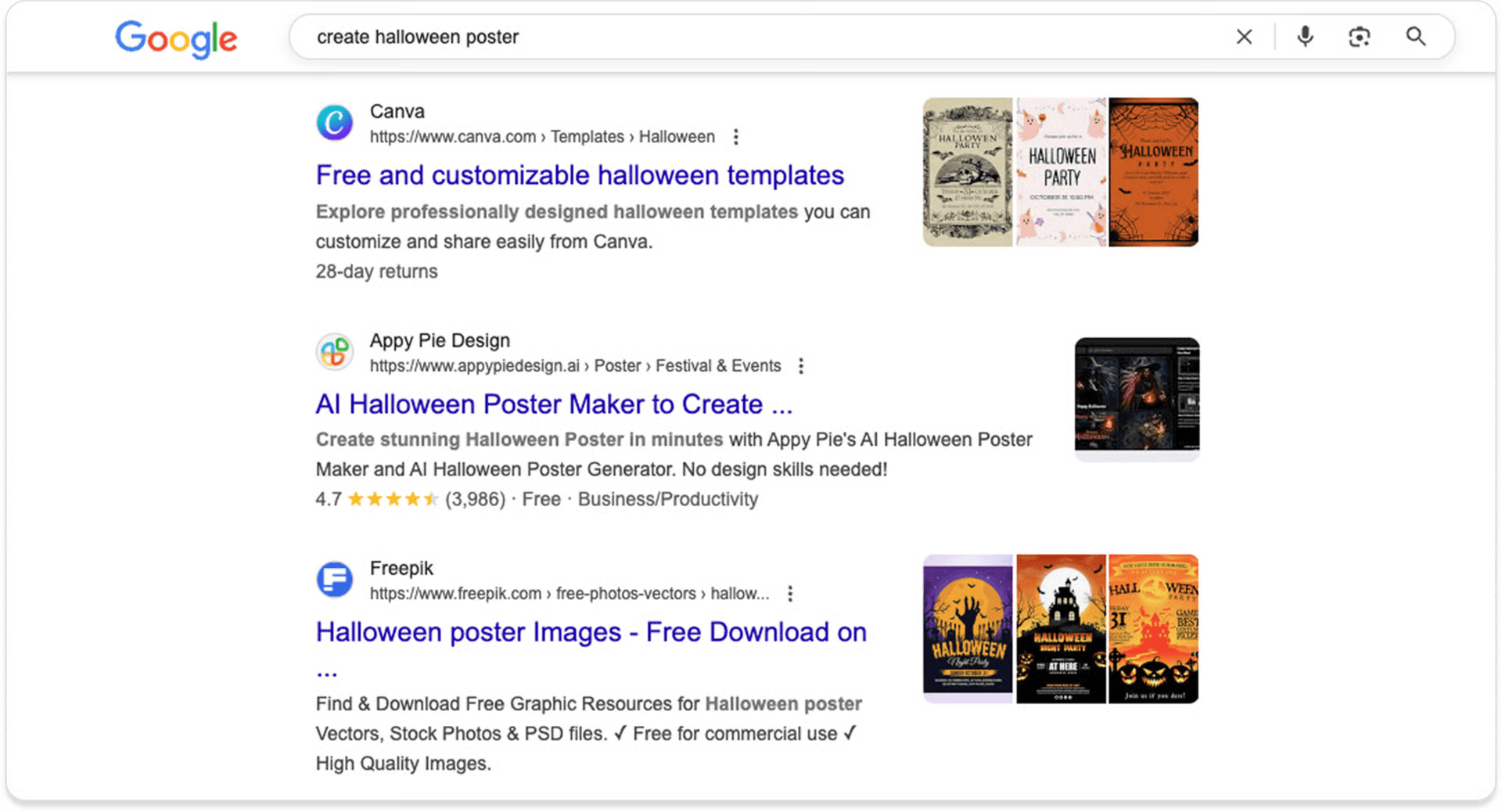
If a user Googles "Halloween poster maker," Canva appears as the top result. Not their generic homepage, but a dedicated Halloween poster landing page. This isn't an accident. Canva built an entire team focused on mapping people's creative jobs-to-be-done, then owned thousands of specific searches like "birthday invitation maker," "logo creator," and "Instagram story templates," capturing users with specific intent.
When they click "Create Halloween Poster," something happens that Adobe simply couldn’t match (they do now have a better web editor). Instead of hitting a paywall or download prompt, they land directly in Canva's editor with Halloween templates already loaded. This is only possible because Canva is both freemium and web-first. Adobe's revenue-focused model required users to download software and start paid trials before seeing any value, making SEO-driven acquisition nearly impossible.
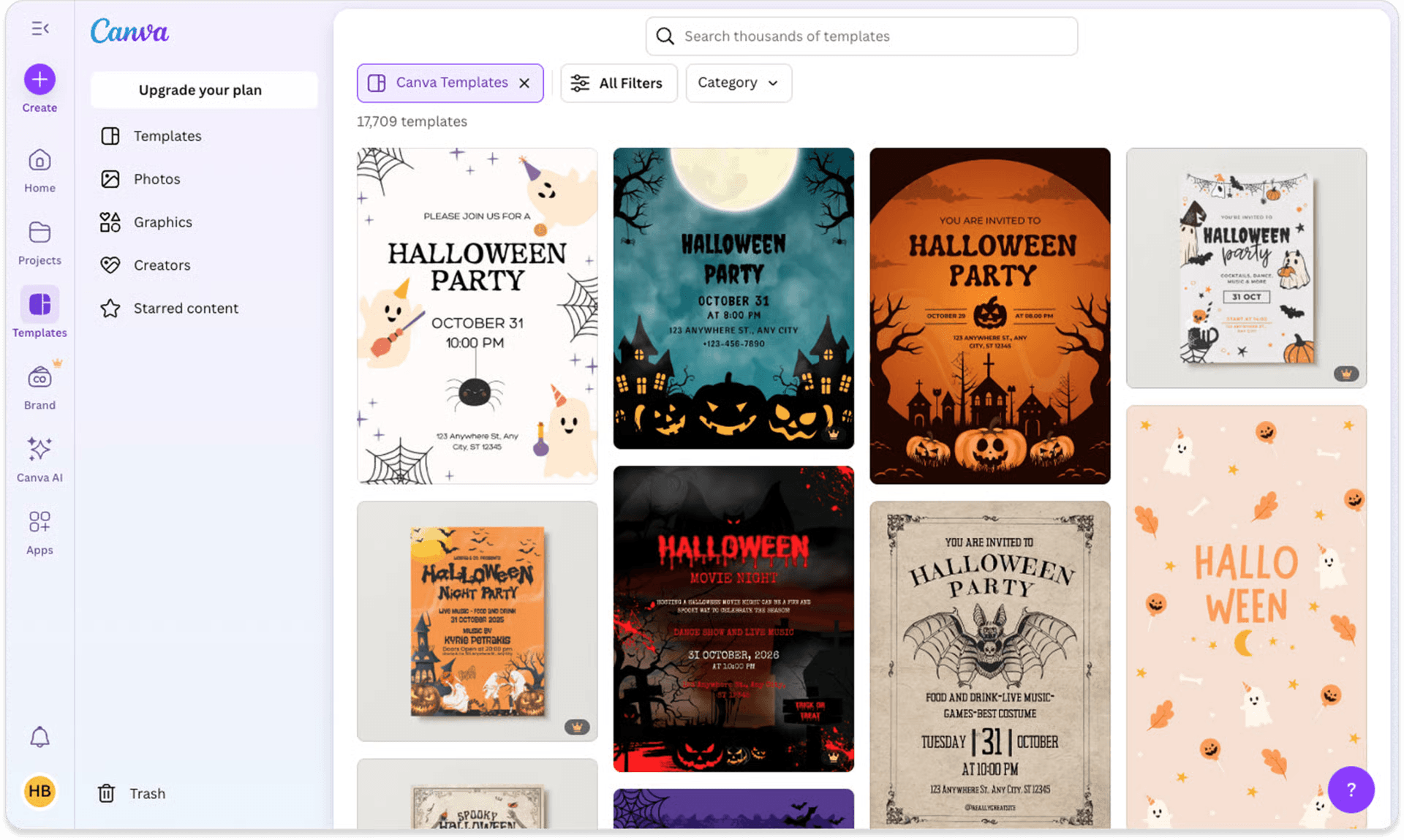
Instead of the blank canvas that paralyzes most users, they see relevant Halloween template options immediately. Traditional design software (including Adobe's) suffered from what Canva calls "blank page fear". Users would open the software, see infinite possibilities, and freeze up. Canva solved this by making the first action absurdly simple.
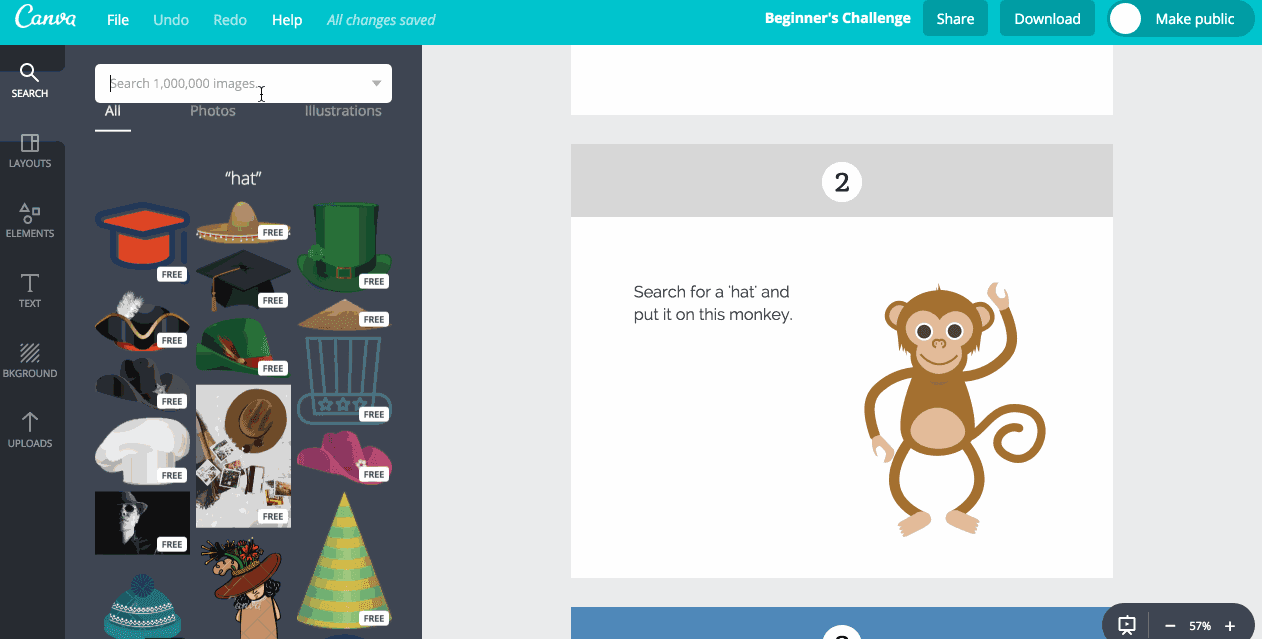
Their original onboarding literally said, "Click on this search box and search for a monkey." It was surprising enough to keep users engaged, simple enough that anyone could do it, and within a few clicks, users had dragged a monkey image onto their design.
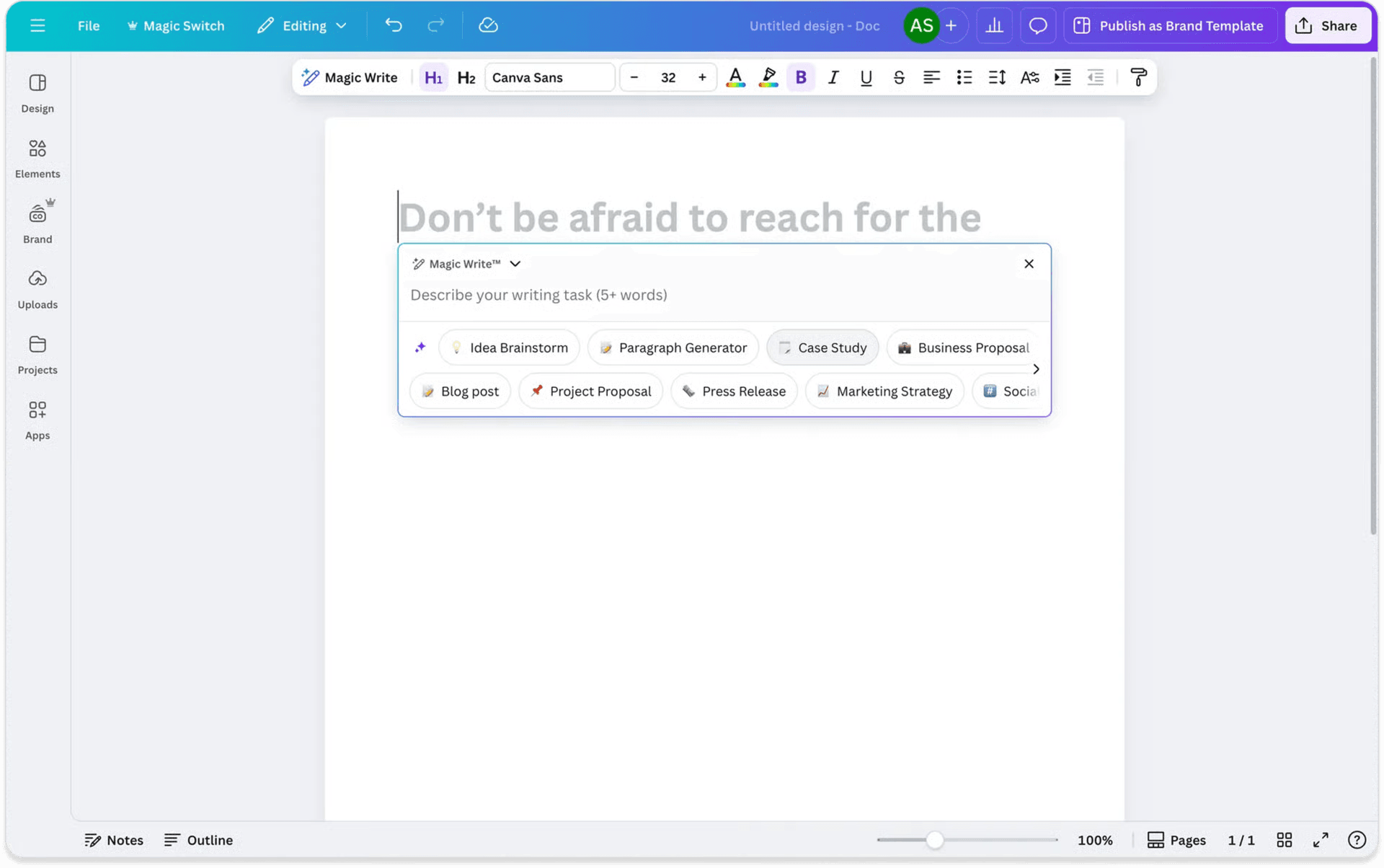
Recently, Canva has taken this even further by using AI to let users simply describe what they want: "Halloween poster for elementary school party with pumpkins and orange colors." The AI generates initial designs, eliminating the blank canvas problem entirely.
This action-based activation massively expanded the market beyond professional designers to anyone who needed to create something visual. While Adobe's complex menus required training, Canva's progressive steps mean within minutes users have customized designs. They've created something they'd never made before and feel capable of doing more.
The final big moment comes when they hit "Download" and they ask whether you want to share it, pulling peers directly into Canva where they can comment and even suggest edits in real-time.
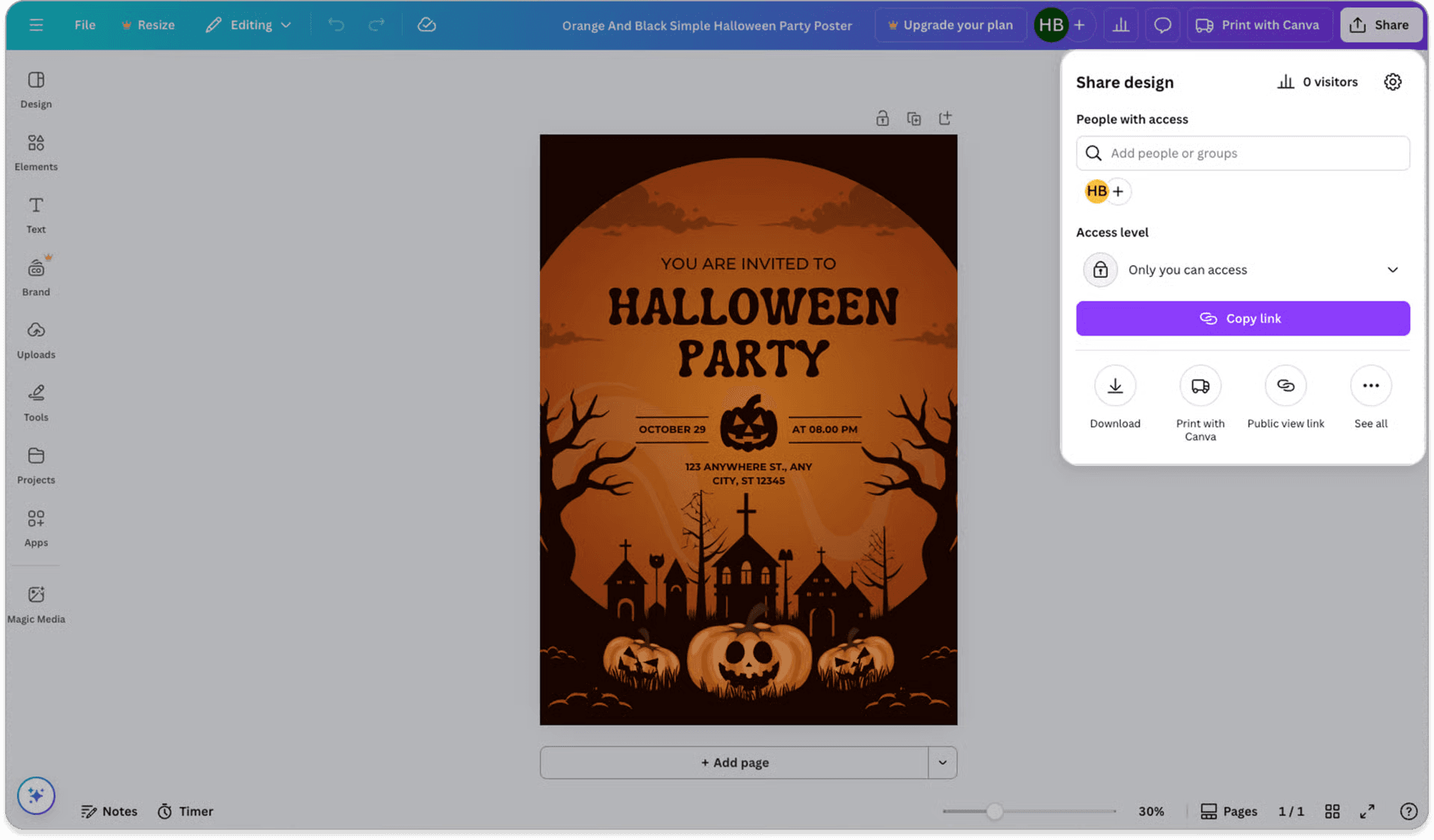
This multiplayer approach created several advantages Adobe's model couldn't match. Higher retention occurs because colleagues pull you back into the product by asking for feedback. Viral growth happens because every shared design becomes a potential acquisition channel. Enterprise land-and-expand works because one marketer's Instagram post becomes the whole marketing team's tool.
The Freemium Foundation That Made It All Work
All three growth mechanisms (SEO-driven discovery, action-based activation, and multiplayer engagement) depended on Canva's freemium model. While paid acquisition costs have skyrocketed across SaaS, free account acquisition costs haven’t grown as quickly. Companies with strong free-to-paid conversion can essentially arbitrage this difference.
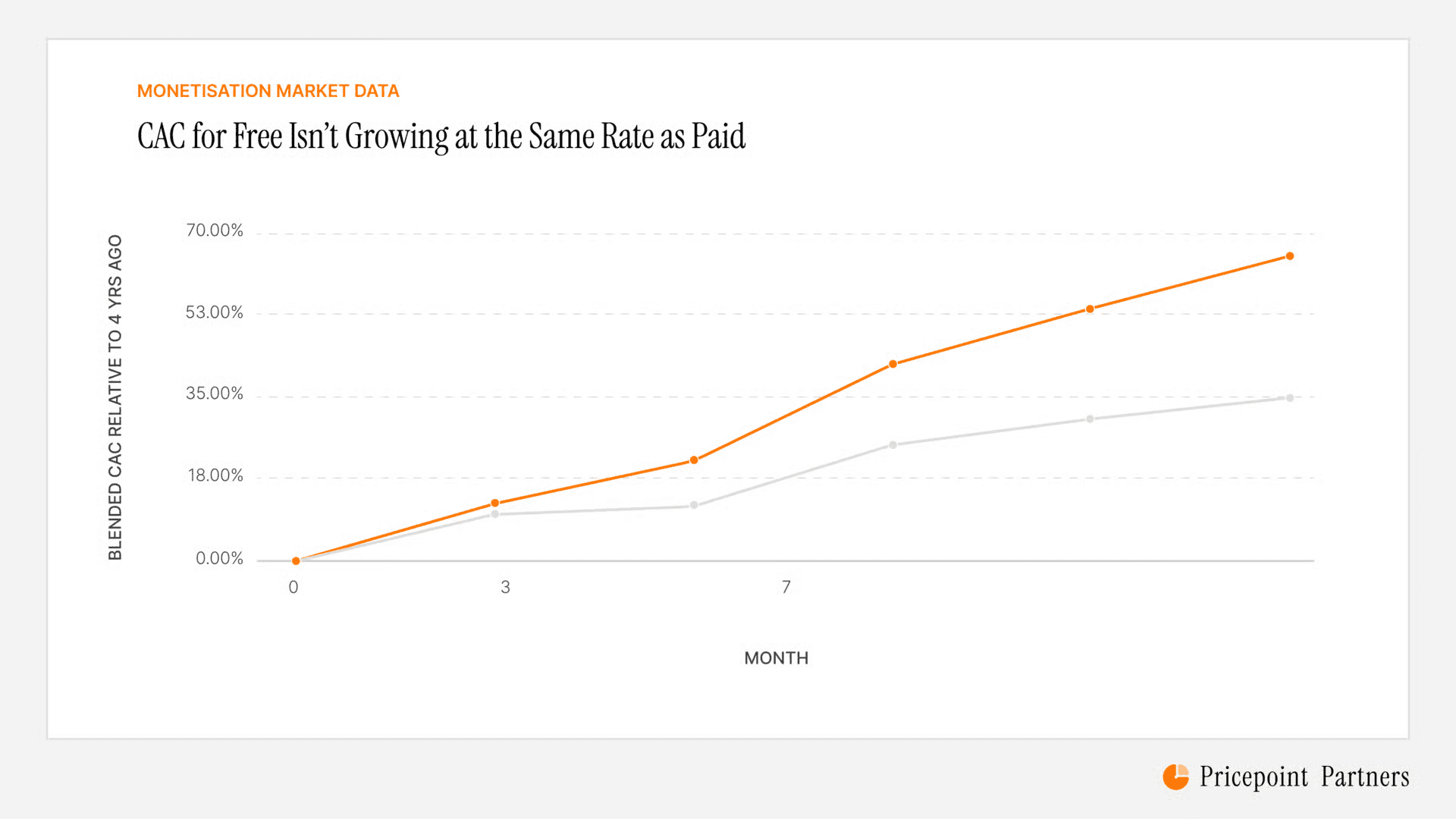
Canva's freemium approach enabled SEO at scale with no paywall friction for Google searchers, lower-pressure onboarding where users could experiment without financial commitment, viral sharing where free users could invite others without cost barriers, and skill-building that created switching costs as users became proficient and reluctant to learn new tools.
Why Adobe Couldn't Respond
Adobe's revenue-focused model, optimized for extracting maximum value from existing customers, made them structurally unable to compete with Canva's approach. Their app-first, subscription-heavy business model couldn't support the kind of frictionless, web-based experience that powered Canva's growth.
More importantly, Canva wasn't stealing Adobe's customers; they were creating entirely new markets. They went after students, marketers, small business owners, and casual creators who would never have considered paying $240/year for Photoshop.